
Project under construction
Effective and Affordable Detox Programs
We offer a range of comprehensive physiological, emotional, and psychological detoxing programs.
Feel the difference


There are different types of detoxes. Broadly, they can be categorized into physiological detoxes (body), psychological detoxes (brain), and emotional detoxes (motivations).
Body, mind, and soul.
The ultimate objective for all humans is happiness—no one seeks to be sad. Detoxes are powerful therapy given they can remove what is interfering with our level of happiness.
Clearly, happiness is an experience. It’s something we feel. We know we're happy when we feel happy, and it's what we’re feeling emotionally that matters the most.
Have a lot of love and joy in our lives, and the rest is just logistics.
An emotional detox removes accumulated ‘baggage’/motivations that are competing against, and suppressing, our innate emotional motivations.
To more easily understand this process, it’s useful to look at the world’s oldest, but still very effective, emotional detox. Understanding the basics is the first step and provides enough information for most.
Of course, bodily detoxes are by far the most popular and generally the detox most people need. A proper body detox is actually a cellular detox given our bodies are composed of trillions of cells.
The good news is our cells have their own cleaning and healing mechanism, which can be activated to do the job.
The ‘bad’ news is our cells can’t be in consumption mode and in cleaning/healing mode at the same time. Similar to how we can't be cooking in our kitchen and cleaning it simultaneously.
Hence, detoxing necessarily involves fasting. It’s only when that relentless avalanche of food stops that our cells can switch from processing mode over to cleaning and healing mode.
This may seem a weird, inconvenient operating system for our cells to have, but we've got to remember we didn’t evolve with supermarkets and corner stores. Our ancestors automatically had periods without food, so it makes complete sense our bodies evolved to do the backlogged cleaning and repair work during those down times.
As we no longer have fasts naturally woven into our lives, we need to deliberately replicate them.
Traditionally, this relationship between fasting and detoxing was well known, though the mechanics of it all remained a mystery until recently. Nowadays, our science understands cellular detoxing very well, and we explain it here. This information is also readily available on YouTube, etc. Here are a few videos with very good presentations.
While the benefits from periodic body detoxing are now mainstream knowledge, the same can't be said regarding emotional and psychological detoxes. They remain largely ‘under the radar,' - still niche - just as physiological detoxes were a few decades ago.
There are numerous reasons for this lack of visibility, with main ones being the general lack of understanding regarding psychological and emotional health, plus the structure of our societies is more conducive for incremental-type therapies as opposed to transformational therapies. People have jobs; therapists have practices, so the one-hour-a-week type of slow, incremental therapy tends to be all that is realistically available.
Incremental therapy generally has a poor success rate, as it’s slow, awkward work trying to ‘renovate our room’ while we’re still living in it. We’re still in the same old momentum, still in the same mindset, so we’re looking to remodel according to our existing tastes/motivations.
Often, at best, we’re just renovating our rut.
An emotional and/or psychological detox is transformational therapy. We step out of our room, step out of our rut, and do the job properly and quickly.
Traditionally, ‘cup’ is the analogy most used in emotional/psychological detoxes. We’re like a cup that has accumulated ‘stuff’—motivations, feelings, beliefs, values etc.—most of which we didn’t choose to have in us, yet those echoes from our past are still there. They heavily influence our objectives via secondhand motivations, thus determining the specific path we choose in life, and that path becomes our reality.
With one breath
They choose the path they ride till their death
Driving on through the night unable to break away
From that restless pull
Ah, the price we pay.
'The price we pay' - Springsteen
The antidote is to empty our ‘cup’ now and again to escape those stale echos. This creates space for motivations/flavors of our choosing and for joy to flow into.
Joy needs space to flow into.
Call it joy, love, God, Tao, or light; call it whatever you want. The label your brain gives it isn't important, but having the capacity to experience it is.
Generally, we're wasting our time trying to pour the fresh and delightful into an already full cup, as most will simply overflow down the sides, and what little gets in is quickly diluted and polluted. That we must first empty out should be obvious, but, understandably, less obvious is how transformational this experience typically is.
Why bother trying to wrestle with, and untangle, contradictions within when most of them can simply be deleted? They don’t belong anyway.
Don’t sort through your trash can; just empty it.
As happiness is an experience, it tends to be very useful to gain control over what we’re experiencing.
If the secondhand recipe we’re currently using is generating a satisfactory taste, then there’s nothing to change.
If it’s not, then we might want to change that recipe.
In practice, a proper body detox is also a mild emotional and psychological detox. This is because it necessarily involves changing some of our ingrained habits—eating every day, for example. One significant change sometimes loosens up the whole rigid structure, allowing other changes to easily occur. Indeed, some can experience the ‘avalanche’ effect—pushing one ‘boulder’ out causes much that's not hardwired in to also tumble out instantaneously.
Transformational, yet surprisingly little effort involved. All we had to do was tilt our cup a bit.
In practice, it's not so easy for most people to 'tilt their cups' as we have egos and our ego is busy 'high fiving' who we currently 'are'. All pragmatic therapists are painfully aware our ego motivations compete against our emotional motivations creating the classic ego resistance to significant change. Ego motivations vs emotional motivations is a whole other topic, but what's relevant here is that detoxing does most of its 'magic' upstream of ego thereby sidestepping that resistance.
Humility is the gateway to happiness.
While our ego locks that gate.
People often lack the flexibility to change as they're focused on being 'good' and 'right,' as defined by the culture they happened to be born into, or by their own reflection, instead of focusing on being happy. They're disoriented away from their actual interests.
‘The first step is to know what you want, not what you ought to want.’
Alan Watts
This is more the realm of psychological detoxes: Accepting the subjective nature of this life thing we're experiencing thereby recalibrating our beliefs closer to the reality as it is both regarding ourselves and the reality/environment we exist within.
At the end of the day, if we want to be happy in reality, we need to accept reality. If we’re navigating by a wildly inaccurate map we can expect to get lost.
Less is more, as the less we feel we need to be happy, the easier it is. Indeed, it's literally impossible to realize a high level of happiness with too many random motivations, as some will inevitably contradict others. Therefore, no matter the path chosen, there's always dissatisfaction, putting a relatively low ceiling on our level of happiness.
Be it a physiological, emotional, or psychological detox, or all three combined, guiding you on that journey to increased health and happiness is what we do.
Note; We're in Lombok, not Bali. We intended to live in Bali, but it's too crowded for our tastes these days. It's taken us a few years to find the right place and make the switch, but from May 26 we'll be available.

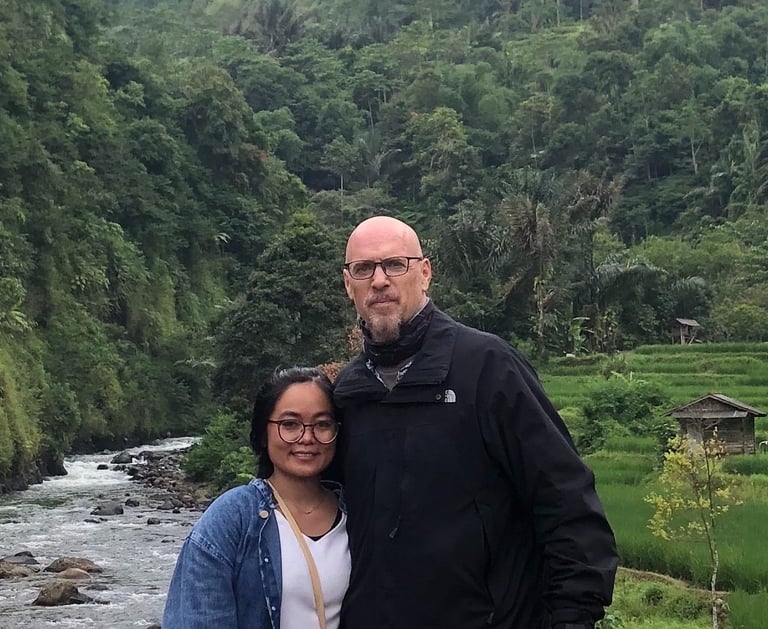
Nui & Craig
We're a husband-and-wife team. Indonesian/New Zealand.
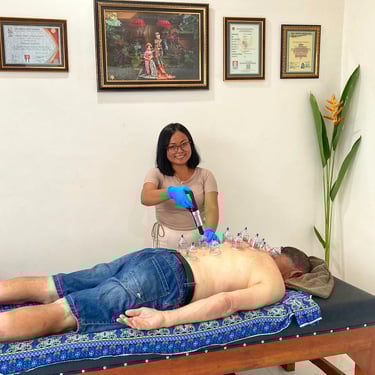
Nui is a qualified and registered midwife and nurse. She was previously working for a detoxing retreat in Ubud She also offers IV drip therapy, cupping therapy, and ozone therapy.
Craig is a NLP (Neuro Linguistic Programming) practitioner and has lived in India for a number of years. There he learnt alternative approaches to physical and mental health and happiness; Yoga, Tai Chi, Vipassana meditation etc. He's practiced detoxing for the last 25 years. These days, he mostly just surfs and plays tennis.
CONTACT
EMAIL; lucidhealthbali@gmail.com
Whatsapp; +62 82146797854
Kuta Lombok
Vipassana Meditation 10 Day Retreat.
The classic motivational detox that is the practical application of the Buddhist theory of happiness. The Buddhist theory/model is basically the same as the modern pragmatic model but its simplicity allows the fundamentals to be easily understood.
Our relationship with food
It's only within the last handful of generations that we humans have begun eating so much and so regularly. This habit has little to do with energy requirements, but is instead largely motivated by the pleasure we experience from eating the delicious food that is readily available these days. Unfortunately, this avalanche of excess food stresses our bodies and leads to health problems and shorter life spans.